
Precision Engineering
4L80E Conversion Packages &Transmission Swap Kits
Built For Performance
Street • Strip • Towing • Swaps
Built In The USA
Performance Transmissions Built In-House
30+ Years Experience
Transmission Specialists Since 1993
Real Tech Support
Talk to Our Transmission Team
Frequently Asked Questions
What Do I Need to Swap From a 4L60E to a 4L80E?
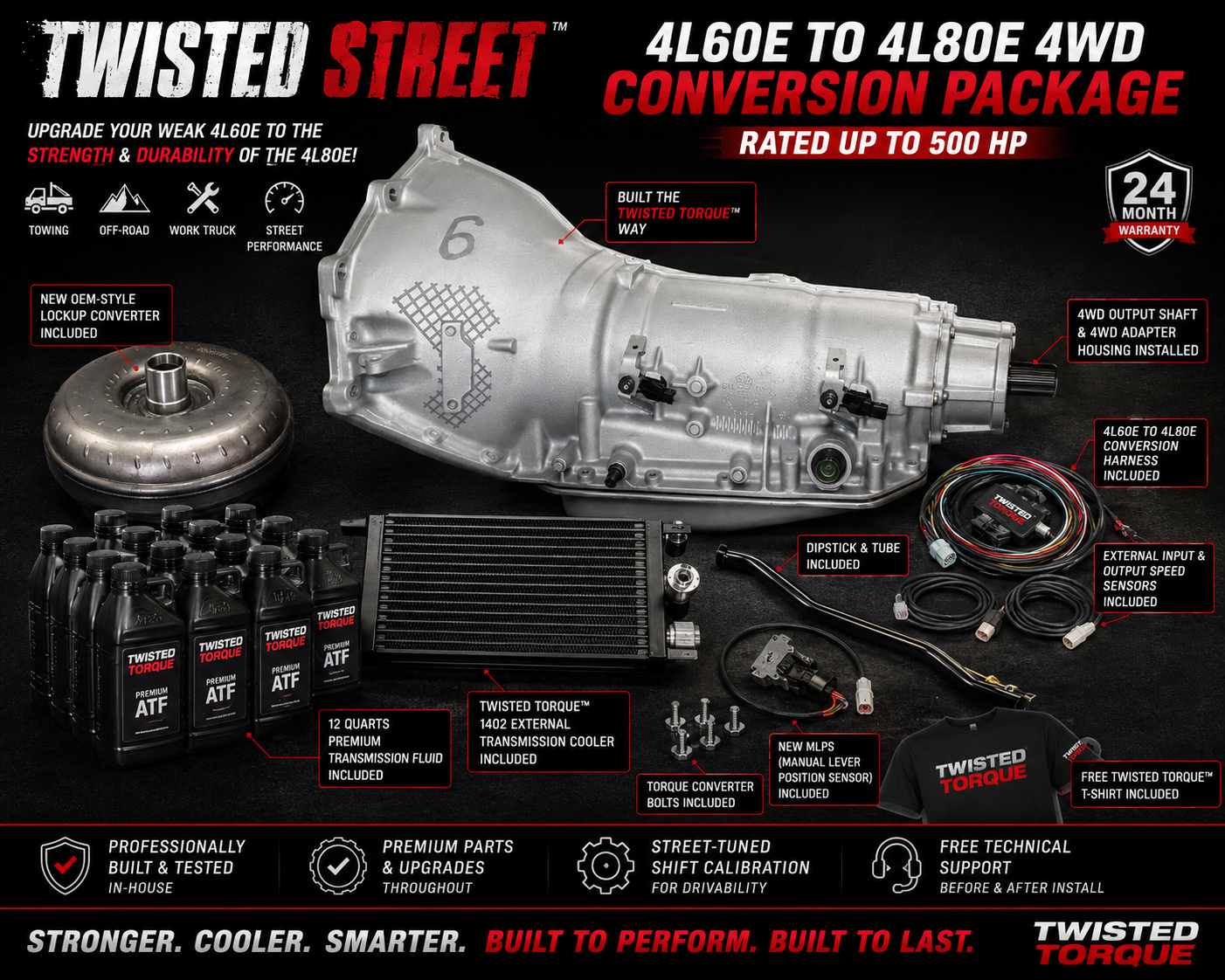
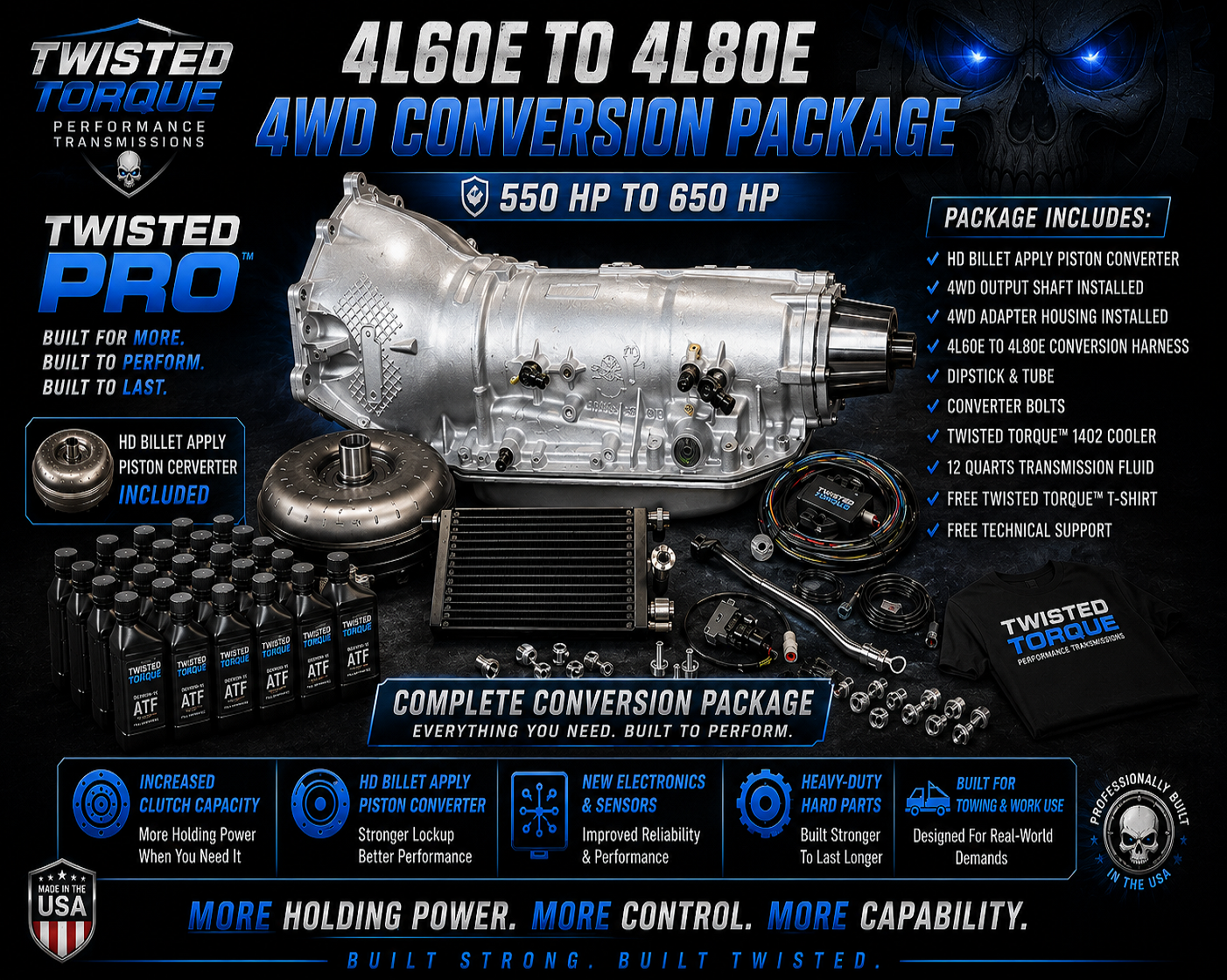
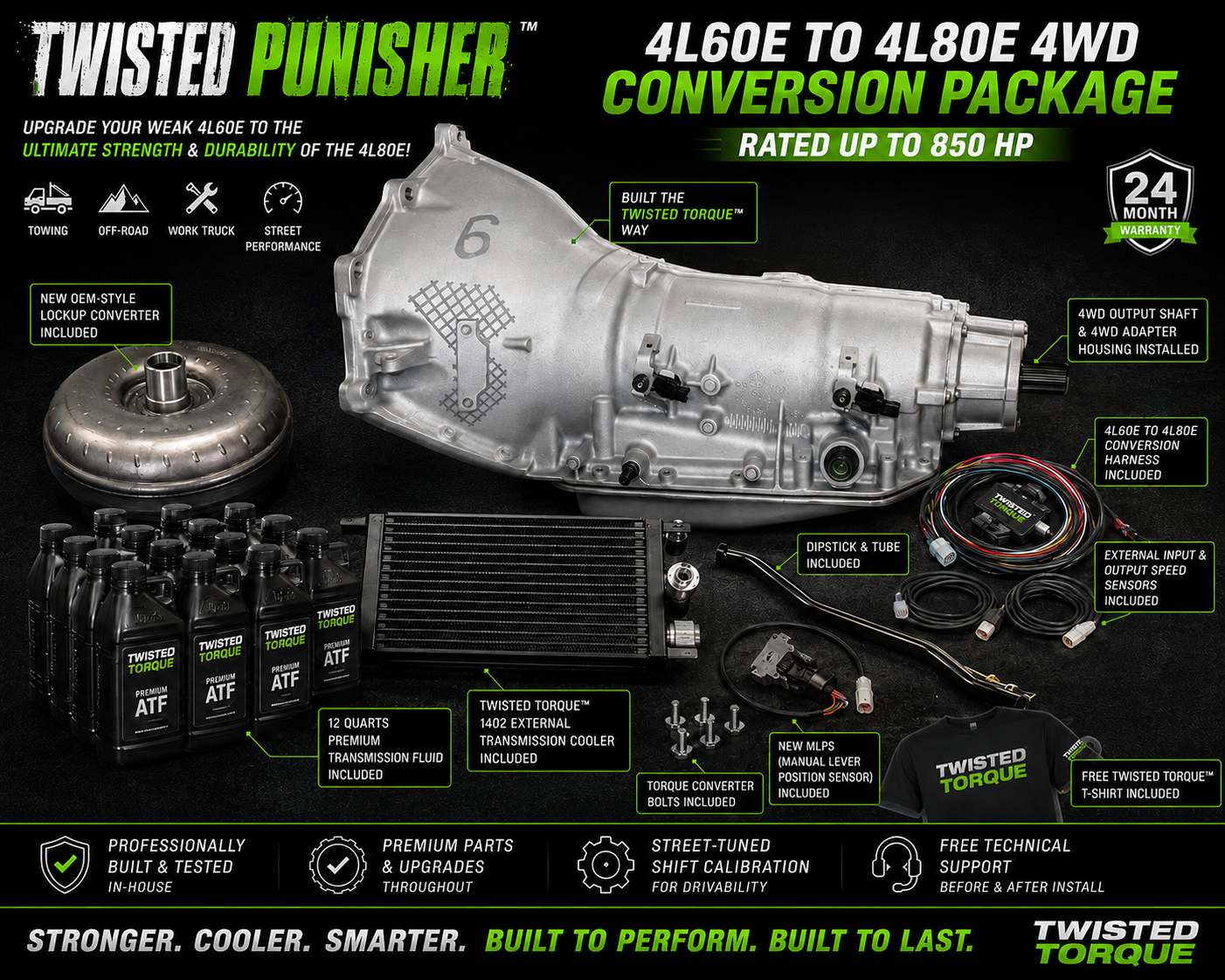
A 4L60E-to-4L80E conversion requires more than simply replacing the transmission. Depending on the vehicle and model year, the swap may require a compatible torque converter, flexplate or adapter/spacer, wiring changes, computer tuning, crossmember or mount changes, driveshaft modifications, cooler-line changes and the correct output yoke or related driveline components. Our 4L80E conversion packages are designed to take much of the guesswork out of matching the major components for the swap.
Is a 4L80E Stronger Than a 4L60E?
Yes. The 4L80E was designed for heavier-duty applications and uses a larger, more robust internal design than the 4L60E. That's why the 4L80E is such a popular upgrade for higher-horsepower builds, towing applications, performance trucks and vehicles where the 4L60E has become the weak link. A properly built 4L80E can also be upgraded substantially beyond its original factory capability.
Will I Need to Modify My Driveshaft or Crossmember for a 4L80E Swap?
Often, yes. The 4L80E differs physically from the 4L60E, including the transmission mount location and overall configuration. Depending on the vehicle, the crossmember may need to be relocated or replaced, and the driveshaft may need to be shortened, modified or replaced with the correct yoke. Always verify the requirements for your specific year, make, model and drivetrain before installation.
Does a 4L60E-to-4L80E Swap Require Wiring or Computer Tuning?
Yes, in most electronically controlled applications. Although both transmissions are electronically controlled, their wiring and control requirements are not identical. Depending on the vehicle, the conversion may involve a wiring adapter or connector changes, additional speed-sensor wiring and PCM/ECM programming or tuning so the computer correctly controls the 4L80E.
Ready to Upgrade Your Build?
Browse our complete collection of 4l80e conversion packages and experience the Twisted Torque difference.